Why Fall Aeration is a Big Deal for Minnesota Lawns
Summers in Minnesota are tough on lawns. Between regular mowing, foot traffic, pets running around, and our heavy clay soils, the ground gets compacted in a way that most people don't even realize is happening. Water starts pooling instead of soaking in. Grass looks tired and thin. Fertilizer just sits on top and never really gets to the roots. That's compaction doing its thing.
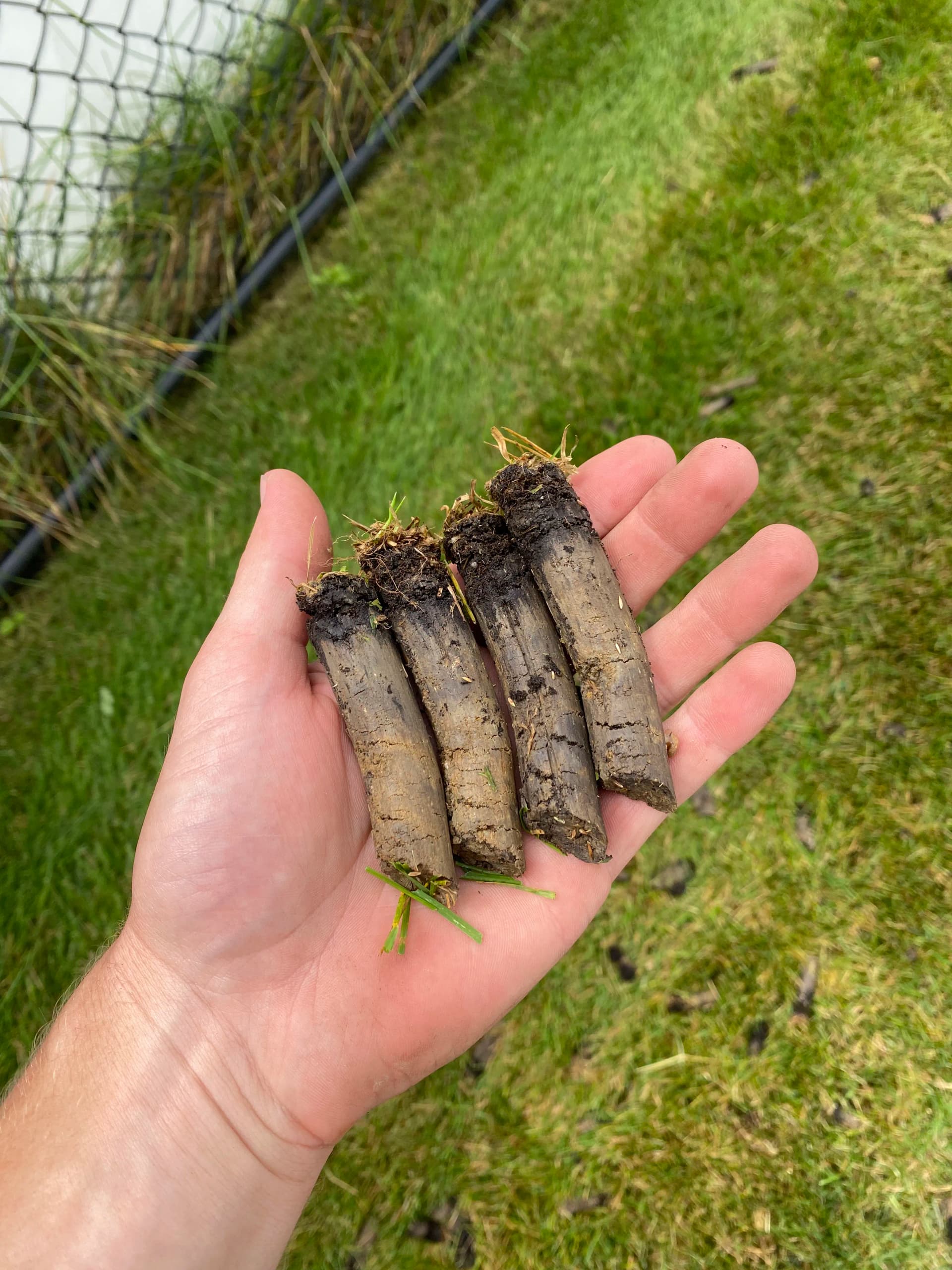
That's exactly why fall is the right time to aerate. Core aeration pulls small plugs of soil out of the ground - and those plugs tell a pretty clear story. When you see how much clay is packed in there, it makes total sense why your lawn has been struggling. Breaking up that compaction gives water, air, and nutrients a direct path down to the root zone, which is where they actually do some good.
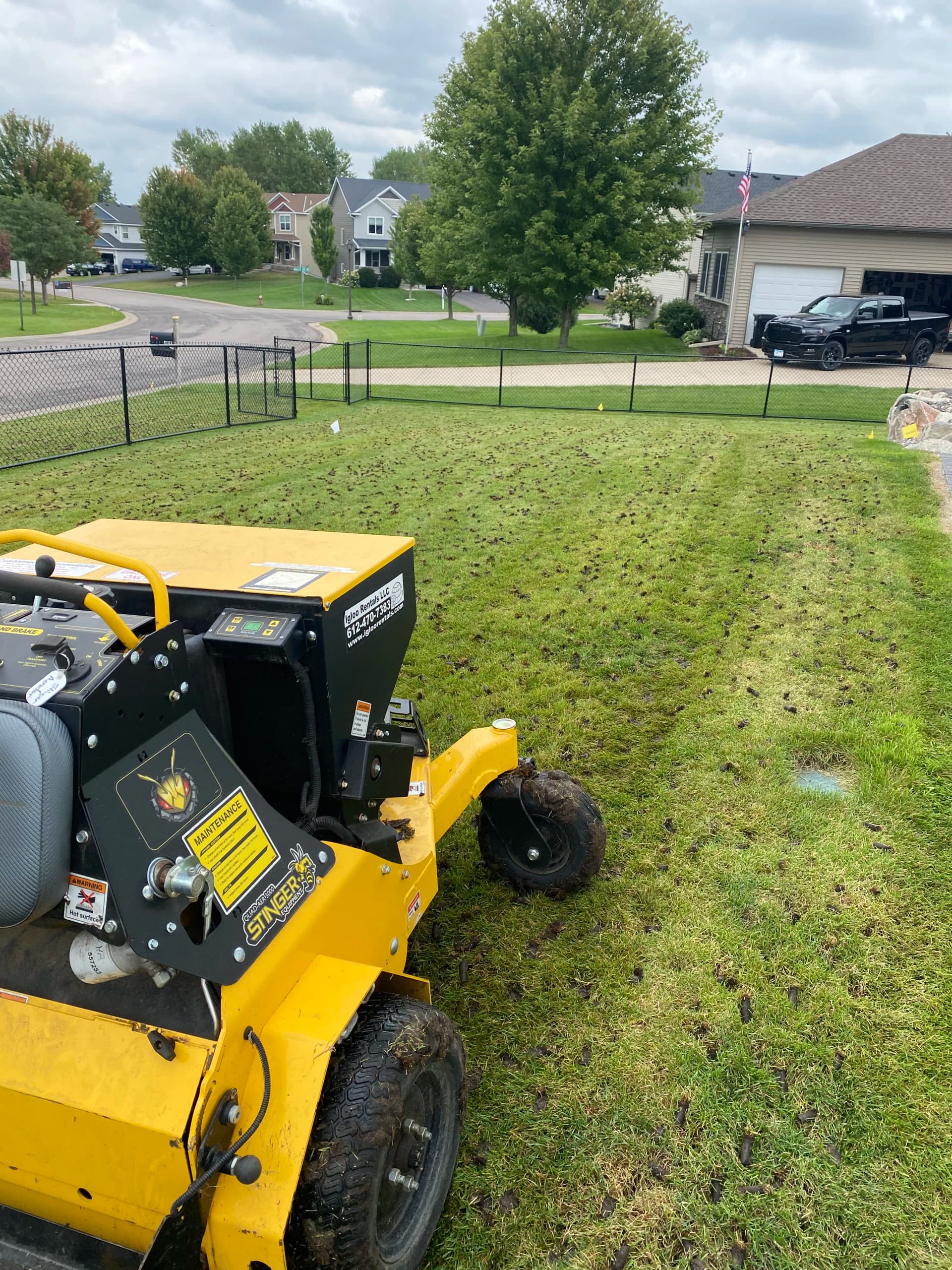
We run a Stinger ride-on aerator, which lets us cover a lot of ground efficiently and pull consistent, deep plugs across the whole lawn. It's not a lightweight walk-behind unit. The difference in plug depth and spacing matters, especially in tough clay soils like what we deal with out here in the St. Michael, Albertville, Hanover, Otsego, and Maple Grove areas.
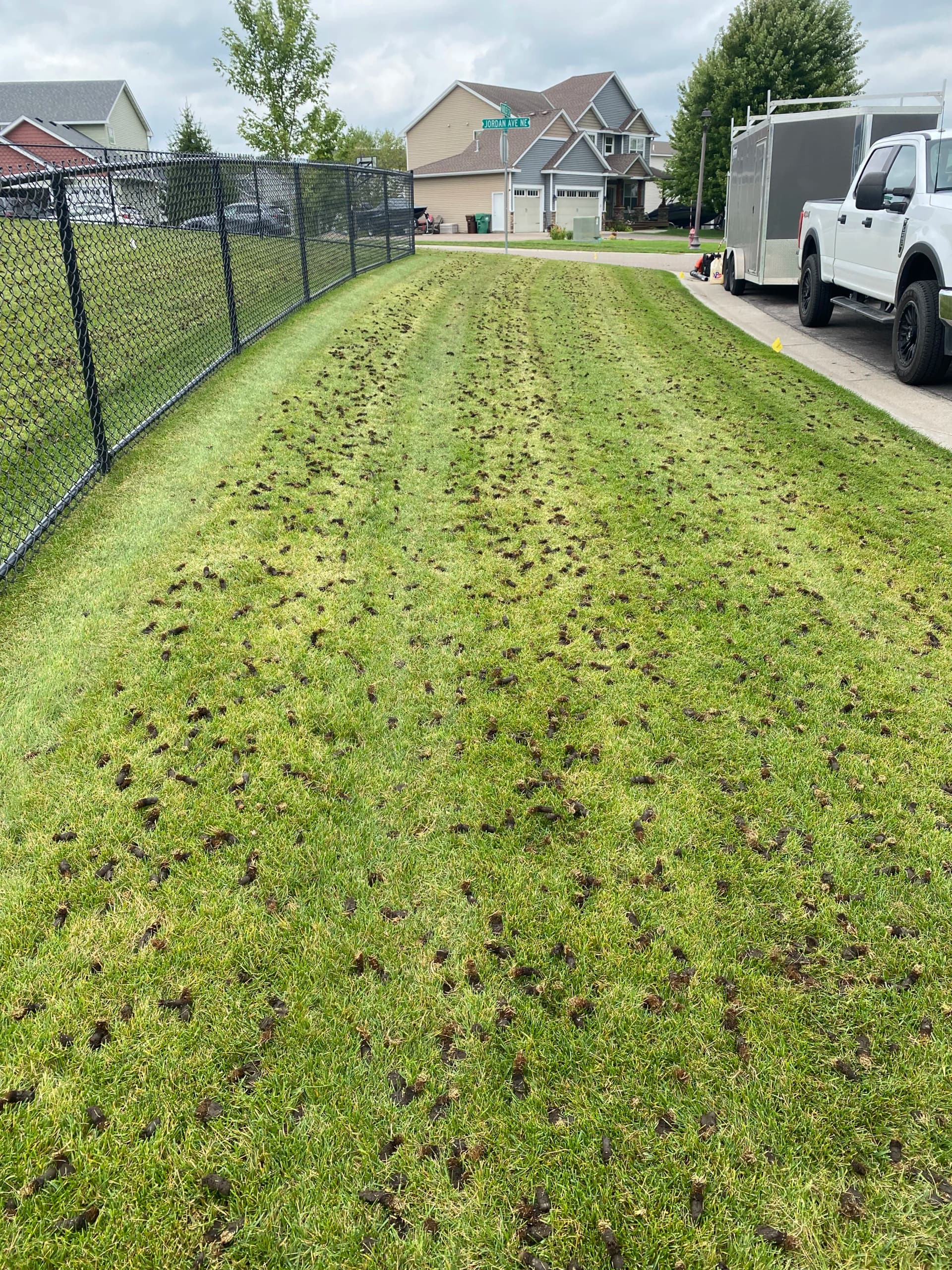
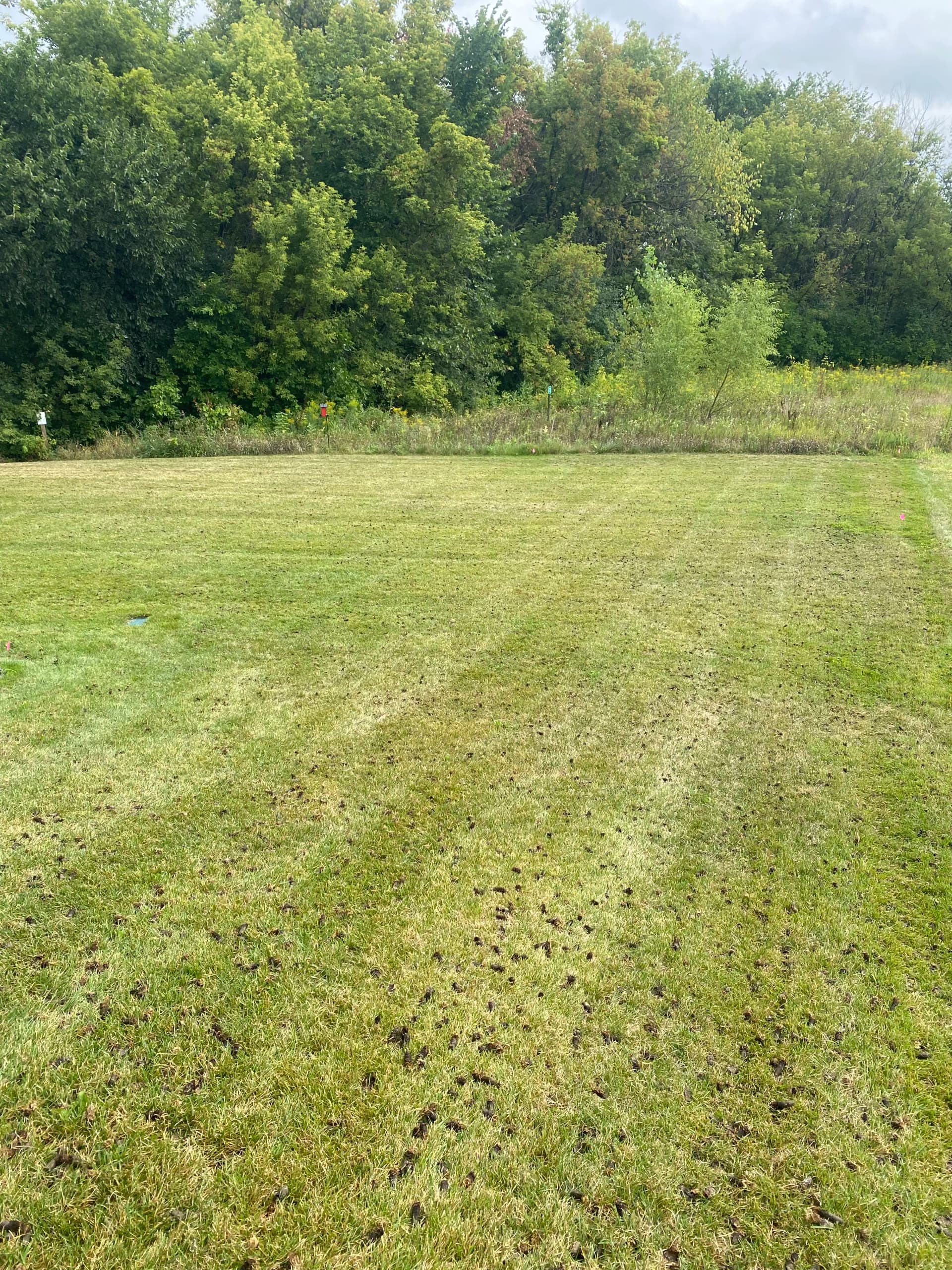
After aeration, the plugs get left on the surface to break back down naturally - they're not waste, they're actually beneficial. As they decompose, they help reintroduce organic matter back into the soil. And if your lawn has thin or patchy spots, pairing aeration with overseeding is one of the best ways to get new grass established. The open channels from aeration give seed direct contact with the soil, which dramatically improves germination.
If your lawn feels hard underfoot, sheds water instead of absorbing it, or just hasn't responded well to fertilizer, compaction is likely the culprit. We still have a few spots open on our fall aeration schedule for the surrounding areas.